
Jul 2, 2026 · Commercial
Access Control Systems: A Business Owner’s Guide
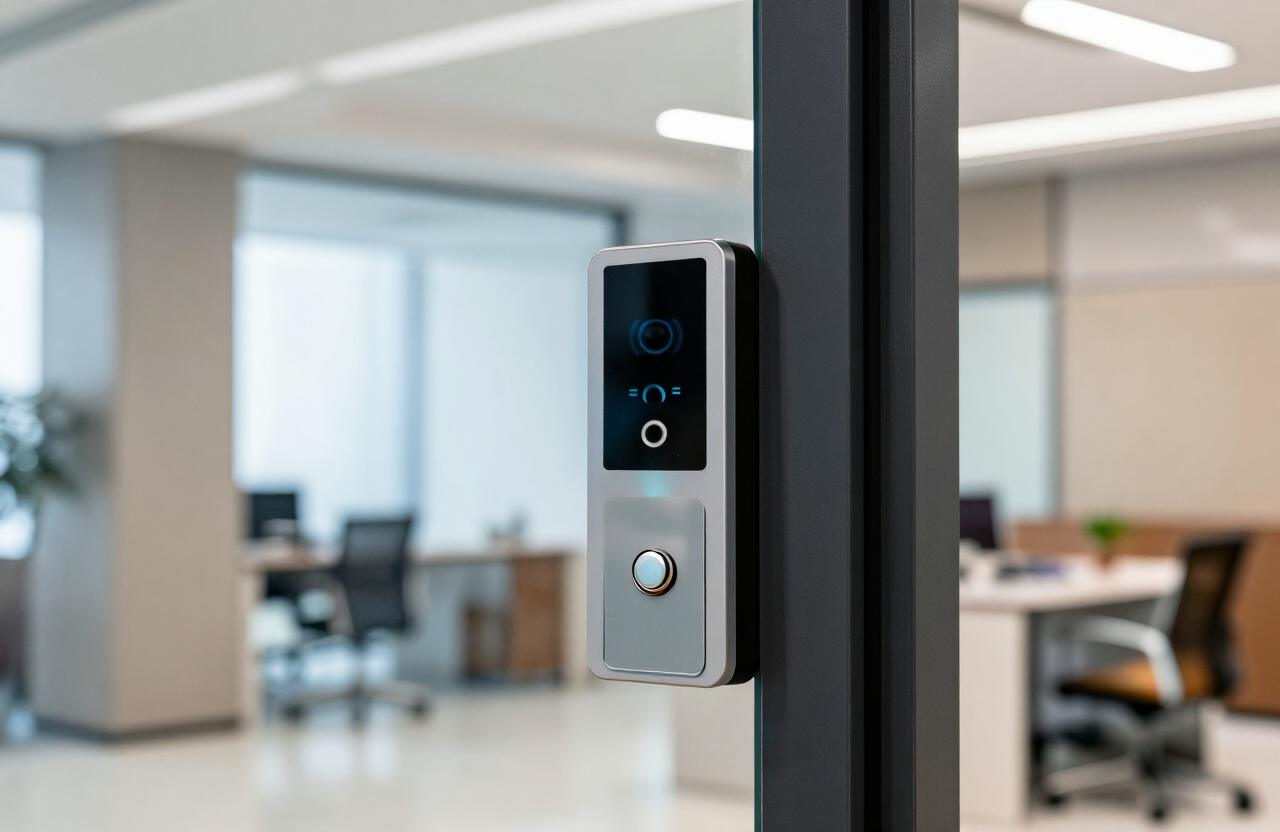
Cards, fobs, and codes instead of keys. What access control offers Onondaga County businesses, and what to consider before upgrading.
What Access Control Replaces and Improves
Access control systems replace physical keys with cards, fobs, PIN codes, or even biometrics. The biggest improvement is control itself: instead of wondering who has a copy of a key, you see exactly who entered, when, and through which door, and you can revoke a lost credential instantly without touching a single lock. For businesses with staff turnover, multiple entrances, or sensitive areas like server rooms and inventory storage, this eliminates the recurring cost and downtime of rekeying. It also creates an audit trail that can be invaluable after an incident. The tradeoff is upfront cost and the need for power and network infrastructure, so the decision comes down to how often your access needs change.
Choosing Between Cards, Fobs, Codes, and Biometrics
Cards and key fobs are the most common credentials — they are inexpensive, easy to issue and replace, and familiar to employees. PIN codes remove the need to carry anything but can be shared or watched, so they work best in lower-security areas or as a backup. Biometric readers (fingerprint or facial recognition) offer the strongest assurance that the person at the door is actually authorized, since a fingerprint cannot be loaned to a coworker, but they cost more and need careful placement. Many businesses layer these: a fob for general entry, a PIN for sensitive rooms, and biometrics only where the stakes are highest. We help Onondaga County businesses match the credential to each door rather than over- or under-buying.
Planning Power, Backup, and Fail-Safe Protocols
Access control runs on electricity, so planning for power loss is not optional — it is a life-safety issue. Doors on escape routes must fail safe (unlock when power is cut) so people can exit in a fire, while high-security rooms may fail secure (stay locked) to protect contents. Battery backup keeps the system running through short outages, and a manual override or keyed bypass lets you in if the electronics ever go down. Consider door compatibility too: some doors need electric strikes, others magnetic locks, and the hardware must suit the door’s frame and fire rating. We design and install systems with these fail-safes built in, so your business stays both secure and code-compliant.
Need Help Right Now?
Call us or request a quote online — we’ll get back to you fast.